Buying Baby Walking Shoes in bulk is not simply a matter of choosing a popular style and ordering more pairs. Buyers must balance fit, flexibility, durability, sizing, and dependable replenishment. The stakes are practical: a stiff sole or narrow toe box can turn a promising product into slow-moving inventory. Details matter.
The American Academy of Pediatrics’ HealthyChildren guidance explains that early walkers generally need shoes for protection, not to learn to walk. That advice gives bulk buyers a useful starting point: prioritize flexible soles, secure fastenings, and room for growing toes. For market context, Grand View Research valued the global footwear market at USD 387.74 billion in 2023. That figure covers all footwear, not baby shoes, so it should not be mistaken for a measure of this niche. Still, it signals a large, competitive category where careful product selection matters.
Pediatric guidance offers an expert principle rather than a wholesale checklist. In the AAP’s words, shoes should be “comfortable and fit well.” Before placing a large order, buyers can test samples on different foot shapes, inspect seams and sole grip, and compare size charts across suppliers. Ask for material details and consistent quality records, too. One sample is not enough. A carton may reveal stitching problems that a showroom pair hides. These checks cannot guarantee perfect fit for every child, and that is worth admitting. The following seven tips focus on reducing avoidable risks while helping retailers choose Baby Walking Shoes families can use with confidence.
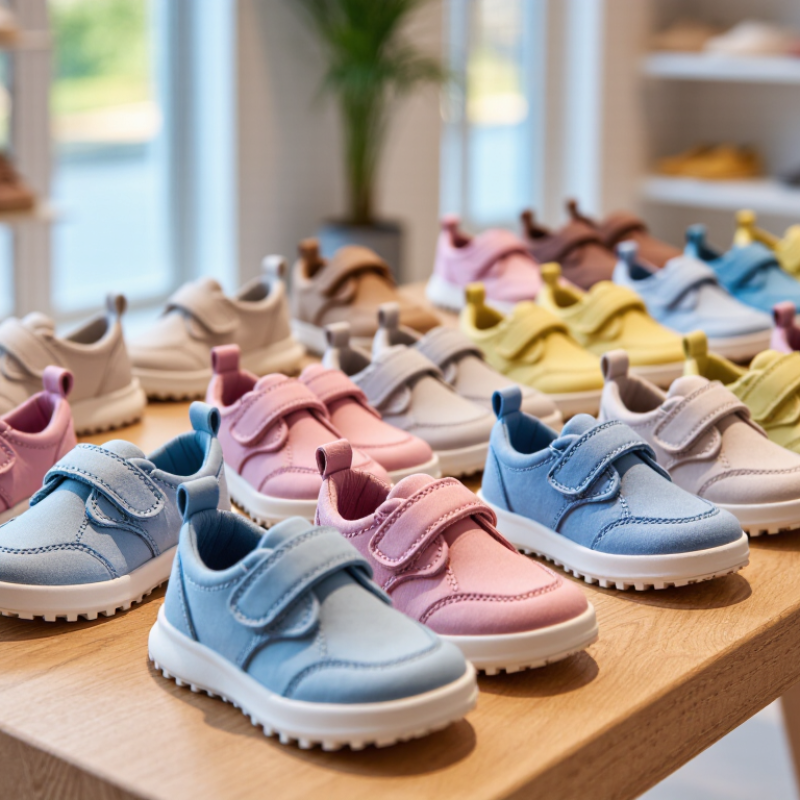
When buying baby walking shoes in bulk, define the age range you expect to serve, but do not use age as a size chart. Babies reach walking milestones at different times, and feet vary even among children of the same age. Ask retailers or customers for recent foot measurements, ideally for both feet, and record the larger measurement. Check the supplier’s size chart for each style, since sizing can differ between shoe designs. Babies grow unevenly. Leave enough room for natural movement, but avoid shoes so large that they slip during steps.
Tip: Build your size estimate from real demand, not guesswork alone. Review past sales, customer inquiries, or enrollment records by age and size. If you lack data, start with a smaller test order across several sizes before committing to a larger quantity.
Keep a simple size breakdown for the planned age range, then compare it with the measurements you collect. A soft measuring tool and a calm moment can help; wiggling toes make readings less reliable. Recheck measurements close to ordering time, especially for older infants. Check each pair. If returns or exchanges are possible, confirm the process before placing the order, and leave some flexibility in the size mix. Bulk planning is useful, but one fixed ratio may not fit every group.
Before placing a bulk order, request sample pairs across the size range. Measure both feet while the child is standing, and leave a little room at the toes without letting the heel slip. Check both feet. Sizes can vary between production runs, so confirm the supplier’s measurements rather than relying on age labels. A spreadsheet helps, but it cannot reveal a stiff seam rubbing against a small ankle.
Look for a lightweight shoe that bends near the ball of the foot, where toes naturally flex. The sole should grip a smooth floor without feeling rigid, and the heel should stay secure without pressing hard. Check the lining and seams by hand; rough stitching can cause irritation. Keep closures simple and snug, and inspect decorative pieces for anything that could loosen. These details may seem small. They matter during repeated steps.
Before approving the full quantity, test samples on children with adult supervision, both indoors and on a clean, level surface. Watch for slipping, toe crowding, or red marks after a short wear. Ask how the supplier checks size consistency and inspects soles, stitching, and closures in each batch. Get replacement terms in writing. I would not judge a shoe by appearance alone; a neat sample does not guarantee every pair fits the same. Bulk buying saves time only when the delivered sizes match the samples.
When comparing baby walking shoes in bulk, examine the upper, lining, and sole rather than relying on appearance alone. Soft leather can resist scuffs, but it may feel warm indoors. Mesh allows airflow on mild days, though it offers less protection from wet ground. Check seams and flexible soles by gently bending a sample pair. The shoe should flex near the toes, not collapse in the middle. Fit matters more. Ask suppliers for size measurements, and test samples on different foot shapes before placing a large order.
Design and season affect how quickly stock sells. Wide openings and adjustable closures can make shoes easier to put on wiggling feet. Avoid stiff collars or slippery soles; babies need room to move comfortably. For warm months, breathable uppers and light linings may suit everyday use. For colder weather, consider a warmer lining and a more protective upper, but avoid bulky designs that restrict movement. Cold-weather stock is trickier. Seasonal forecasts can help, yet children’s growth is hard to predict. A careful size mix reduces leftovers, though no plan gets every size right. Keep a few samples for checking fit and wear before approving repeat orders.
Use these illustrative 1–5 planning ratings to compare common material trade-offs when buying in bulk. They are general guidance, not standardized test results; suitability can vary with construction, climate, and care. Consider ordering samples and matching quantities to your local seasons.
A reliable supplier should explain how baby walking shoes are measured, made, and checked before shipment. Ask for a size chart with foot-length measurements, not just age ranges; babies of the same age can have very different feet. Request samples in several sizes and inspect the seams, flexible soles, closures, and packaging. Ask for production photos or inspection records, too. Ask for samples.
Minimum order quantities can vary by size, color, and material. Get the terms in writing: a low total minimum may still require dozens of pairs in each size. Before agreeing, map the order against likely demand. Too many tiny sizes can sit in storage while popular sizes sell out. Check the details. If the supplier allows mixed sizes, confirm whether that changes the unit price or delivery time.
Compare bulk quotes using the full cost, not the headline price. Include sample fees, packaging, freight, and any charges for custom labels. Ask whether the quoted price changes at higher quantities, and confirm how long it remains valid. I would not assume a cheaper pair is better value; inconsistent sizing can lead to returns and wasted stock. A small trial order may cost more per pair, but it can reveal problems before a larger commitment. Supplier answers should be specific, not just reassuring.
Tip 1 — Plan samples across sizes, not just one attractive pair. Check inner length, toe-room, seam finish, sole flexibility, and how firmly the upper joins the outsole. Try samples on a clean floor and inspect them again after repeated bending. Small tests matter. A mistake I would avoid is approving a bulk order from photos alone; stitching and fit can vary between sizes.
Tip 2 — Write a simple inspection sheet before production. Record measurements, material feel, color, and any defects, then compare random pairs from each carton against the approved sample. The National Retail Federation’s 2024 retail returns report estimated that 16.9% of U.S. retail sales were returned. That figure covers retail broadly, not baby shoes specifically, but it shows why preventing avoidable fit and quality problems deserves attention. Keep dated photos and inspection notes; they make supplier discussions more precise.
Tip 3 — Plan storage before cartons arrive. Keep boxes dry, off the floor, away from direct sunlight, and clear of heaters. Label each carton with size, style, quantity, and receipt date. Store popular sizes where staff can reach them without shifting heavy stacks. Use older stock first, but check packaging for dampness or crushing before dispatch. It is easy to focus on unit cost and forget warehouse space; I still find that estimate worth revisiting before ordering.
Use recent foot measurements, not age alone. Measure both feet and record the larger one. Babies grow unevenly.
Leave room for natural toe movement, but avoid shoes that slip during steps. Fit can be difficult to judge from a chart alone.
Start with a small test order across several sizes. Customer questions or enrollment records can also guide your size mix. Test before scaling.
Mesh can feel cooler on mild days, while a warmer lining may suit colder weather. Check the upper, lining, and sole. Forecasts are imperfect.
Check seams, closures, and packaging. Gently bend the sole; it should flex near the toes without collapsing in the middle.
Request a chart with foot-length measurements, plus samples in several sizes. Ask how shoes are measured and checked before shipment.
Include sample fees, packaging, freight, and custom-label charges. Confirm whether higher quantities change the price or delivery time. The headline price may mislead.
Ask whether minimum quantities apply by size, color, or material. Confirm in writing whether mixed sizes affect the price or delivery time. I could still misjudge demand.
Buying Baby Walking Shoes in bulk starts with understanding the age range of the babies who will wear them and estimating the shoe sizes you’ll need. Since children grow quickly and sizing can vary, plan for a balanced range rather than ordering only the most common sizes. Before placing an order, check that each style offers a comfortable fit, suitable support, secure fastenings, and safe, slip-resistant soles.
Compare materials and designs for comfort, durability, and the seasons in which the shoes will be used. When assessing suppliers, consider minimum order quantities, pricing, and the flexibility to reorder popular sizes. Request samples to evaluate construction and fit, then establish quality checks for incoming stock. Finally, store inventory in a clean, dry, organized space so sizes are easy to track and shoes remain in good condition until needed.

Search4Fun Shoes